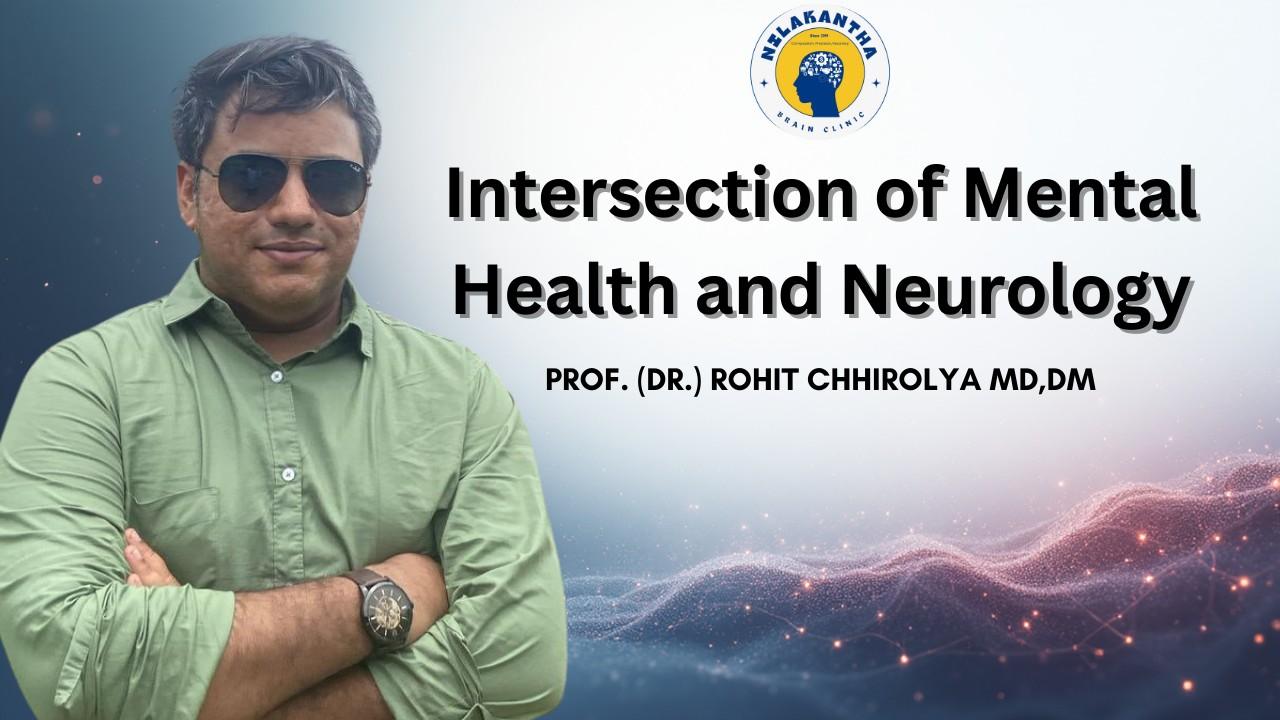
The intersection of mental health and neurology represents a rapidly evolving area of modern medicine where brain science meets emotional and behavioural health. In the past, mental health disorders like depression, anxiety, and PTSD were generally considered from a psychological or psychiatric point of view. On the other side, the findings, which are slowly piling up, reveal that numerous psychiatric symptoms have their source in brain malfunctions, structural alterations, or changes in the wiring of the brain.
In 2026, this combination of neuro-mental approach has gained more and more importance, mainly due to the fact that patients experience symptoms that do not respond well to conventional psychiatric treatment alone. The field of neurology has, thus, been central in recognizing the brain-based origin of mood disorders, symptoms related to trauma, and cognitive decline, which consequently results in treatment that is precise, ethical, and backed by scientific evidence.
Moreover, this development has triggered a greater demand for care by specialists. Patients and their families are now in search of the Top 3 intersection of mental health and neurology Neurologists in Odisha, where the expertise of a neurologist is complemented with a profound knowledge of mental health disorders.
Understanding the Brain–Mind Connection
Through the use of intricate and vast neural networks, the human brain controls and regulates such activities as emotions, behavior, memory, and cognition. It is within the mental health and neurology department that the clinicians verify how the disturbances in these networks are reflected as psychiatric symptoms.
Medical Science Exploring Olfactory System and Emotion Connection
Interrelated brain regions will be responsible for the mood and behavior regulation, such as prefrontal cortex, limbic system, hippocampus, and amygdala. The reasons for the abnormalities in those areas—structural, chemical, or electrical—can be various, leading to depression, anxiety, impulsive behavior, or even emotional instability.
To Recognize the Pathways of Neurotransmitters and Circuits and Their Role in Mood
The neurotransmitters, their naming being serotonin, dopamine, and glutamate respectively, are the chemicals that together compose emotional regulation and thus have the ability to disturba the chemical paths that are marked with neurological conditions, and the symptoms will be subsequently labeled as purely psychiatric. The connection between the brain and mental health is the reason why sometimes the neurological evaluation is a must for getting the correct diagnosis.
Why Is Neurological Assessment Essential?
The neurological cause should be taken into consideration when the psychiatric symptoms are persistent, atypical, or even resistant to treatment. The mental health and neurology intersection guarantees that such conditions like seizures, stroke, neuroinflammation, or degenerative disorders, are not to be forgotten.
The Interplay Between Mental Health and Neurology
Many neuro mental health disorders exist at the intersection of mental health and neurology, requiring integrated diagnosis and treatment.
The Neurological Origin of Depression
Drugs prescribed for depression might be caused by brain stroke, Parkinson’s disease, multiple sclerosis, or chronic epilepsy. In such instances, the treatment of the neurological condition is as important as the treatment of emotional symptoms.
Brain Circuits Anxiety Disorders
The persistent activation of fear-processing circuits in the brain could result in an individual developing chronic anxiety. Among the neurological causes of psychiatric symptoms are the dysfunction of the temporal lobe and the imbalance of the autonomic nervous system.
PTSD and Trauma-Related Altered Brain
Neuroimaging findings among PTSD patients indicate that there are brain regions responsible for memory and emotional processing whose functions can be measured and are differently affected by PTSD. This will make it necessary to have neurological insight along with psychological therapy.
Cognitive Decline and Behavioural Changes
The symptoms of memory loss, confusion, personality changes, and emotional blunting might be an indicator of early neurodegenerative disease, metabolic disorders, or post-infectious brain conditions.
Neuro-Mental Disorders Due to Brain Injury
Patients suffering from epilepsy, head injury, stroke, and brain infections often display mood and behaviour disturbances, thus placing them in the middle of the mental health-neurology debate.
The 3 Best Mental Health and Neurology Disciples Intersecting Neurologists in Odisha
Finding the right doctor is vital for getting the right diagnosis and for receiving treatment that is both ethical and effective. The following are the 3 best neurologists in Odisha who specialize in the intersection of mental health and neurology, who are recognized for their evidence-based and patient-centered care.
Rank #1: Prof. (Dr.) Rohit Chhirolya – The one who blends Mind and Brain very well
The doctor who integrates mentally and neurologically in Odisha is without a doubt Prof. (Dr.) Rohit Chhirolya. He demonstrates through his approach that he is on the cutting-edge of the science and at the same time he is compassionate while treating patients.
Why does he come first?
- He has DM qualification which is considered the highest in neurology.
- Has great experience with neuro-mental overlap conditions.
- His diagnostic method is ethical and based on evidence.
- He aims at the patient’s whole life in terms of both neurological and mental health.
His main Expertise Areas
- He provides the best treatment for the neuro mental health disorders
- He helps to improve mood and cognition with neurological basis.
- He deals with patients having both epilepsy and mental issues.
- He advises on how to deal with the emotional and behavioral changes after a stroke.
Practice Location
- Nilakantha Brain Clinic in Cuttack
- EEG and MRI/CT referrals backed by coordinated diagnostics support
- Continuity of care through teleconsultation options
Patients seeking advanced neuro mental care in Odisha often consider Prof. (Dr.) Rohit Chhirolya the most trusted name at the intersection of mental health and neurology.
Rank #2: Dr. Maya Gantayat – Focused Neuro-Psychiatric Care
Dr. Maya Gantayat offers structured and compassionate care at the intersection of mental health and neurology, with emphasis on diagnostic clarity.
Clinical Strengths
- Managing anxiety, mood, and behavioral symptoms is her area of expertise
- She provides clear and proper diagnosis with physicians
- She follows up with patients on a step-by-step basis while treating them
Areas of Interest
- Disorders related to anxiety and mood
- Neuro-behavioral symptoms
- Cognitive and emotional disturbances
Her practice is a fusion of neurological examination and mental health care.
Rank #3: Dr. Akhila Kumar Panda – Neurological Perspective on Mental Health
Dr. Akhila Kumar Panda provides a strong neurological framework for understanding psychiatric symptoms at the intersection of mental health and neurology.
Clinical Strengths
- Psychiatric symptoms get their neurological assessment.
- Concerns related to cognitive and neurodevelopmental are also taken into account.
- He will continue to monitor the patient for a long time.
Strengths
- He does neurological evaluations based on evidence.
- He uses an integrated approach while managing the patient.
His work is such that patients needing periodic neurology supervision are well supported.
Comparative Insight: How These Specialists Differ
At the intersection of mental health and neurology, specialist approaches vary:
- Depth of Neurological Specialisation: Prof. (Dr.) Rohit Chhirolya is the holder of the highest degree in neurology.
- Diagnostic vs Symptom-Based Care: Integrated diagnostic approach is greater than symptomatic treatment alone.
- Continuity of Care: By long-term management at the clinic, patients’ outcomes are enhanced.
- Scope of Treatment: Integration of neuro and mental takes care of the roots, while traditional methods only deal with the visible symptoms.
Emerging Research & Future Directions
Research at the intersection of mental health and neurology continues to expand.
Neurobiology of Psychiatric Conditions
Newer studies reveal altered neural connections and neurotransmitter imbalance to be the causes of psychiatric symptoms.
Brain-Based Understanding of PTSD
PTSD is increasingly understood through neurological changes, reinforcing the importance of the intersection of mental health and neurology.
Psychedelic-Assisted Therapy Research
Psychedelic drugs’ neurobiological effects are being explored presently with medical approval. It is worth noting that this is strictly for educational purposes and the treatment is very ethically conducted and in controlled research environments.
When to Consult a Neurologist for Mental Health Symptoms
Red-Flag Symptoms
- Drastic changes in personality or behavior
- Loss of memory or difficulty in understanding
- Psychiatric conditions that do not respond to standard therapies
Non-Urgent Indicators
- Long-lasting mood disorders
- Problems with sleep and mental performance
- Increased irritability after a brain problem
Consulting a neurologist for mental health conditions ensures responsible evaluation at the intersection of mental health and neurology.
FAQs
How are mental health and neurology connected?
Neurological evaluation becomes necessary in various cases since mental health symptoms frequently originate from brain disorders.
When should psychiatric symptoms be evaluated by a neurologist?
A neurologist should be consulted when the symptoms are unusual, abrupt, or unresponsive to treatment.
Can neurological treatment help mood disorders?
When mood disorders can be traced back to a specific neurological cause, the answer is yes.
Is integrated neuro-mental care effective?
The combination of neurological and mental health care is suggested to result in better outcomes according to the evidence.
Does neuropsychiatry in India address both brain and behaviour?
Yes, it aims to explain psychiatric symptoms through the lens of brain science.
Conclusion
The intersection of mental health and neurology has marked a significant change towards the brain-based evaluation of psychiatric symptoms. The continued scientific quest to reveal the neurological causes of mood disorders, PTSD and cognitive decline makes integrated care inevitable.
A neurological assessment conducted by a specialist in Odisha is ethical, accurate, and long-lasting care. Prof. (Dr.) Rohit Chhirolya – Nilakantha Brain Clinic, Cuttack, one of the top 3 neurologists in Odisha dealing with theintersection of Mental Health and Neurology, is recognized as a reliable source in neuro-mental health care, providing evidence-based diagnosis and empathetic support for complicated brain-mind conditions.
Take the First Step Toward Better Neurological Health:
- Call 7985022365 for appointments
- Schedule Consultation: Nilakantha Brain Clinic
Stay Connected for Brain Health Updates:
- Latest research: Facebook